NEMS Logo NIH Environmental Management System Logo
NIH Environmental Management System

Take Action to Protect the Future

Because of a lapse in government funding, the information on this website may not be up to date, transactions submitted via the website may not be processed, and the agency may not be able to respond to inquiries until appropriations are enacted. The NIH Clinical Center (the research hospital of NIH) is open. For more details about its operating status, please visit cc.nih.gov. Updates regarding government operating status and resumption of normal operations can be found at opm.gov.

Managed by the Office of Research Facilities, Division of Environmental Protection (DEP)

​​​​​​​​​​​​​​​​​​​​​​​​​​​​​

December 2025

Banner_Redo_2025-03-05.png

                                                                                                                ​                                                                                                       SUBSCRIBE                   PREVIOUS ISSUES

​​​​Featured Article                                                                                                                                                                                                                                                                       

​​A Taste of the Holidays​

Holidays weave lasting memories, as we gather at the table sharing food and laughter, rejoicing festivities with family and friends. Whether entertaining at home, at a restaurant or working in the hospitality industry, food plays an important role in connecting us with culture and heritage.

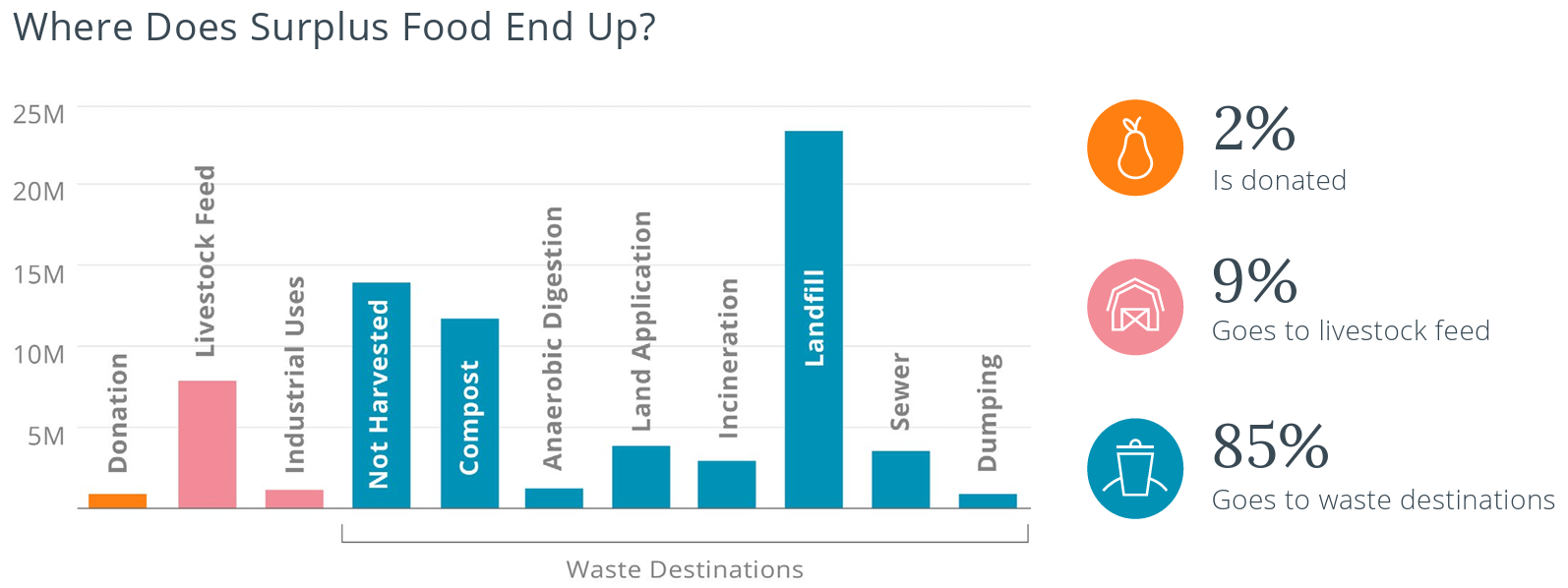
Shockingly enough, during Thanksgiving Americans discard nearly 320 million pounds of food valued approximately at $500 million.1 On average, the U.S. accounts for 30-40% of the food being wasted every year,2 which tends to increase, especially during the holidays.3 Eighty-five percent of the food wasteA including the surplusB and purchased food is discarded/unconsumed and sent to waste destinations (see Fig 1), 9% is fed to livestock and only 2% is donated.4​ EPA estimates the cost of food wasted is $728 per consumer or $2,913 for a U.S. household of four5 with approximately $382 billion surplus food generated and wasted annually nationwide.4

Where Does Surplus Food End Up? 2% is donated, 9% goes to livestock feed, and 85% goes to waste destinations
Ref: ReFED (2025). From Surplus to Solutions: 2025 ReFED U.S. Food Waste Report. https://refed.org/downloads/refed-us-food-waste-report-2025.pdf

Food waste is one of the single largest materials sent to landfills per EPA report in 20185 with negative environmental impacts,  as shown in Fig 2.6 7 Additionally, resources are spent in producing, packaging, transporting and selling uneaten food and money spent on the unconsumed food at home.5 Despite food being wasted in the United States, nearly 44.2 million Americans face food insecurity per 2022 USDA report.8

Environmental Impacts of U.S. Food Waste: What resources go into a year of food loss and waste in the U.S.?

Efforts combatting food waste date back to early 1​940s when “don’t waste food campaigns”9 began, leading to more formal food-waste reduction efforts in 1990s-2000s10 Food waste was identified as a national problem in 2010.11 More recently, in the 2020s, collaborative efforts between EPA, White House, USDA and FDA were initiated. Together they published the National Strategy for Reducing Food lossC and Waste and Recycling Organics in 2024, geared towards advancing the nationwide goal of 50% prevention of food loss and food wastage and recycling food and other organic waste in 2030.12​ Its goals are closely aligned with the UN Sustainable Development Goal for reducing food waste per person from 328 pounds in 2016 to 164 pounds.13​

Additionally, FDA provided several important resources and guides, including the 2022 Food Code​, Tips to Reduce Food Waste​, and Food Loss and Waste Social Media Toolkit​ for stakeholders and consumers to work together in reducing food wastage.9 Other emerging solutions for reducing food wastage include the food rescue organizations such as Feeding America, or City Harvest that act as food banks. Technology has a role to play as well, including the development of apps connecting and providing surplus food to consumers or charities. The multipronged approach to fighting food waste also includes improved packaging and labeling and educating households about portions, meal planning and, as outlined in in the Take Action article.

Reducing food waste requires something from all of us. Small actions can add up to enormous impact. Let us come together this holiday season in joining efforts to create memories at the dining table while considering ways for minimizing food wastage.

AFood Waste: Per USDA, “Food waste occurs at the retail and consumer levels and reflects food that is fit for consumption but is discarded.” Other agencies have developed specific definitions of food waste such as EPA, UN.
BFood surplus: Per USDA, “Wholesome, edible food that was produced or purchased but not consumed.” Other agencies have developed specific definitions of food surplus such as EPA, ReFED.
CFood loss: Per USDA, "Food that spoils or is lost before reaching the consumer due to problems in storage, handling, processing, or transportation.” Other agencies have developed specific definitions of food loss such as UNEP, FAO.


​​Spotlight                                                                                                                                                                                                                                                                                    

​       
Composting at the NIH​​​​​​​​​


​The NIH’s evolving mission to meet national public health needs includes maintaining effective waste management across all its facilities in compliance with federal, state and local regulations to protect staff, visitors and resources​.​​​​​​​​


LEARN MORE

​​Take Action                                                                                                                                                                              ​                                                                                                

​       IMG_7776.JPG

The Gift of Food​​​​​

Preventing food waste can be effective now more than ever, given the food being used during holiday festivities. Below are a few ways you can reduce the impact of your food consumption this holiday season.


LEARN MORE​

Fun Fact                                                                                                                                                                                                                                                                         
Did you know? ​​​​​​Food waste reduction efforts in the United States date back to World War II, where several public campaigns sprung up across the nation ​to encourage gardening and communal food canning as part of the war effort. In 1943, 75% of American homemakers put up 4.1 billion containers of food, averaging 165 jars each.1


Newsletter Feedback                                                                                                                                                                                                                                                              
​​​If you found this article useful, please let us know! We appreciate hearing how we might improve our future articles, including topics you would like to read about. Please take a moment to complete this quick feedback form:

​​​​​​​​The NIH Green Zone Newsletter is a publication intended to inform NIH staff about the Division of Environmental Protection and NIH Green Teams projects and initiatives. The text contained in this newsletter is not copyrighted and can be reprinted without permission. If you use portions of this newsletter in your own publication, we ask that you please credit the source. We welcome your comments and suggestions. Thank you.​​
​​
​Division of Environmental Protection | Office of Research Facilities | Office of Management

National Institutes of Health | U.S. Department of Health and Human Services​​


Contact NEMS

We look forward to hearing from you. Reach out to us in an email.